
- Information and care
- Feeding
- Nuptial flights
- Care of a queen
- Size of the ants
- Hibernation
- Anthill humidity
- Ideal anthill temperature
- Egg and larva time
- Data to take into account for your breeding
- Best anthill for Crematogaster auberti
Information on Crematogaster auberti
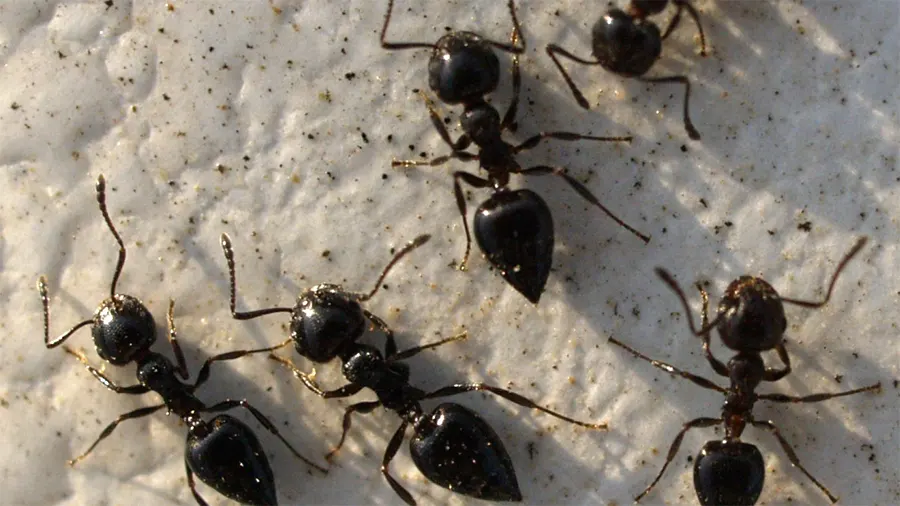
Native to southern Europe and northern Africa, these ants colonize much of the soil in arid climates. Despite their small size, their sting is painful and they raise their abdomen when they feel threatened to facilitate the attack against their prey or attacker.
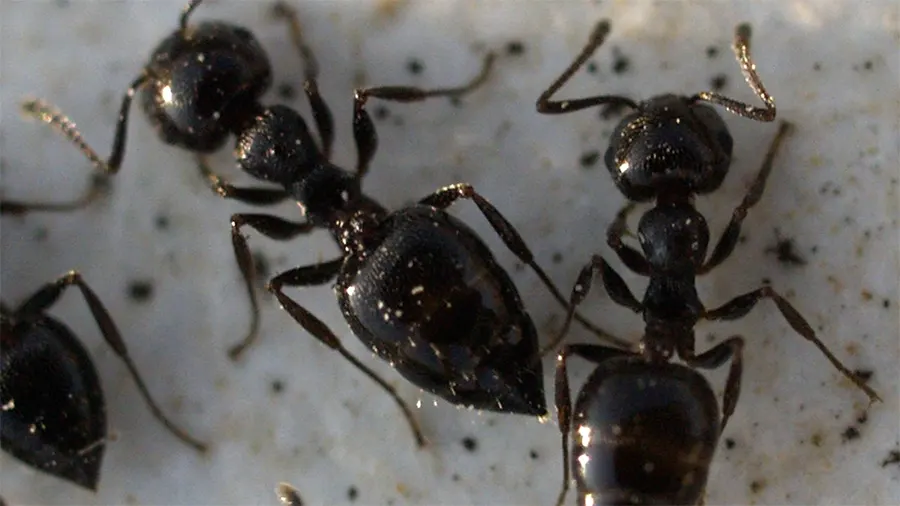
Very similar, although less aggressive and voracious, to its cousins, the Crematogaster scutellaris, it has a pointed or pointed heart-shaped abdomen. They are usually rather nocturnal ants, so they do not stand out in their daily activity in broad daylight. They spend much of their time guarding their queen with great suspicion, who is rarely left alone.
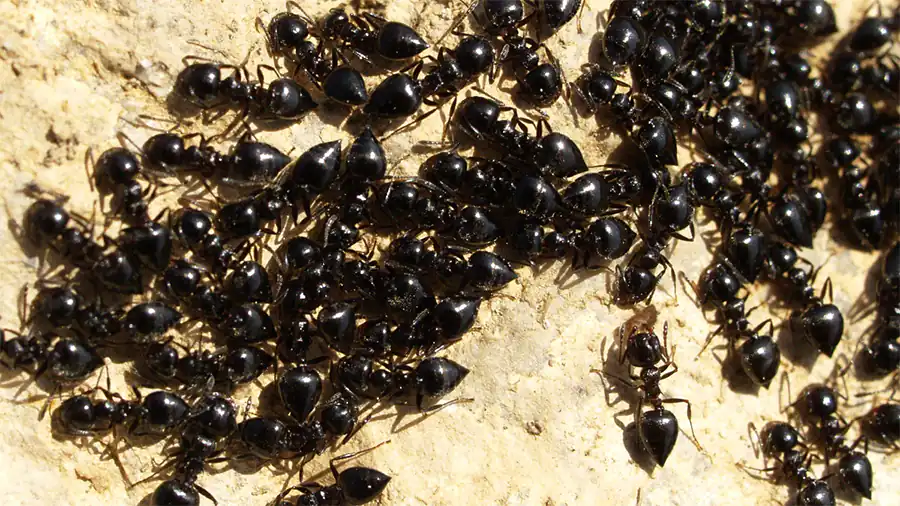
Crematogaster auberti colonies can become very prolific and numerous if they have a large food source within their reach, so it is not uncommon to see highly developed home anthills with large daily protein intakes.
Feeding Crematogaster auberti
If you are wondering how to feed your Crematogaster auberti ants, you may be interested to know that they can eat a wide variety of foods. From sugary liquids or with honey, to insects or fruits.
These ants abhor all varieties of seeds, so feeding your Crematogaster auberti seeds is not a good idea if you want your colony to thrive in a healthy way.
In general, the favorite foods of Crematogaster auberti are insects, both living and dead. These ants gladly feed on darkworms, crickets, fruit flies or cockroaches in a rather voracious and grateful manner.
As for the liquids, feeding the Crematogaster auberti is also relatively simple since these ants will appreciate any type of sugar mixture. Whether it’s honey water, sugar water, sweetened milk… It’s usually something they love.
It is also a very good idea to feed your Crematogaster auberti ants some type of liquid nectar such as Sunburst. Keep in mind that this type of syrup will not provide the necessary proteins to your ants, so you should supplement the diet with insects or protein syrups so that your Crematogaster auberti can feed and develop in the best way.
Breeding flights of Crematogaster auberti
When are the nuptial flights of the Crematogaster auberti?
The queen flights of these ants usually occur from the beginning of July to the end of October, although these dates can always vary due to the weather conditions of both the year and the area in which they are found.
What time are the flights of the Crematogaster auberti?
As we have mentioned before, both the dates and the times can vary depending on multiple factors, but the flights of the future queens of Crematogaster usually concentrate between 13:00 and 18:00. Always taking into account sunlight and other atmospheric conditions.
What is the best time to catch Crematogaster auberti queens?
It is very difficult to estimate a perfect moment to capture impregnated princesses. However, these ants will be more likely to fly on sunny days after a rainy day.
It is likely that the queens of these ants will take flight when they notice a certain humidity in the environment that allows them to make their first nest and spawn on moist ground.
Caring for a queen of Crematogaster auberti
They can be polygynous although it is not recommended in early stages of the colony. Although they can tolerate each other, it is better if they are kept separate and only have contact with the worker ants, who will not have any problem having several queens in the colony.
It is recommended from time to time some sugary liquid to help her in her task of increasing the offspring.
How many years does a queen of Crematogaster auberti live?
The life expectancy of the queens of Crematogaster auberti is usually around 15 or 16 years, but as in all species of ants, there are thousands of factors that influence this calculation.
Size of the ants
If you are interested in knowing how big the Crematogaster auberti are, these are their sizes:
- Crematogaster auberti queen size: Between 7 and 9 mm.
- Crematogaster auberti male size: Between 3.8 and 4.2 mm.
- Crematogaster auberti worker size: Between 3.2 and 4 mm.
Hibernation of Crematogaster auberti
In their natural environment, these ants hibernate between mid-November and late January. The temperature must be maintained between 12º and 16º during the hibernation period.
Is hibernation mandatory?
No, hibernation is not mandatory for this species but it is always recommended since it is the natural way in which they live in their habitat.
Anthill humidity for Crematogaster auberti
As can be seen by seeing their predisposition to areas where they live in hot and arid climates, Crematogaster auberti ants require little humidity for their correct development. Between 30% and 50% should be more than enough for the colony to thrive properly.
Technically they can live in anthills without a humidity system as long as they have a drinking fountain in the outside area that they can use, but it is always better to try to keep the anthill with a correct percentage so as not to force them out every time they need it. This gains importance in advanced stages of the colony in which there are already many individuals.
Ideal anthill temperature
An optimal temperature for its correct development would be to keep the anthill between 20ºC and 25ºC. Keep in mind that this temperature will vary if we want the ants to hibernate in the corresponding months.
Egg and larva time
There are no strictly precise data that allow us to know how long it takes for an egg to become an ant for this species. However, and leaving aside multiple factors such as the temperature of the anthill, humidity, a diet rich in protein or sugar… The approximate time in which the egg would turn into an ant would be just under 60 days.
Data to take into account for your breeding
It is important to know that the Crematogaster auberti are a very chemical species. It is necessary to maintain the anthill with good ventilation to avoid massive suffocation of it.
If you still have a small growing colony in the test tube, try not to stop the tube excessively to favor the entry of air and the exit of the formic acid secreted by these ants.
Best anthill for Crematogaster auberti
Taking into account all the factors that we have commented on in this breeding sheet, a good anthill for Crematogaster auberti would be one that allows us to maintain and control the temperature between 20 and 25ºC and the humidity between approximately 40%.
Being a species that can have massive growth, the ideal would be to have a modular anthill that allows us to expand when we see that our ants begin to run out of space.
Our AntManiacs 3D modular anthills fit perfectly to the needs of this species of ants, allowing us to expand the space as much as necessary, maintaining proper ventilation and creating different humidity points that allow us to maintain a good level for the ants.
* Photos owned by Ferran Turmo Gort under license Creative Commons