
- Information and care
- Feeding
- Nuptial flights
- Care of a queen
- Size of the ants
- Hibernation
- Anthill humidity
- Ideal anthill temperature
- Egg and larva time
- Data to take into account for your breeding
- Best anthill for Crematogaster scutellaris
Information on Crematogaster scutellaris
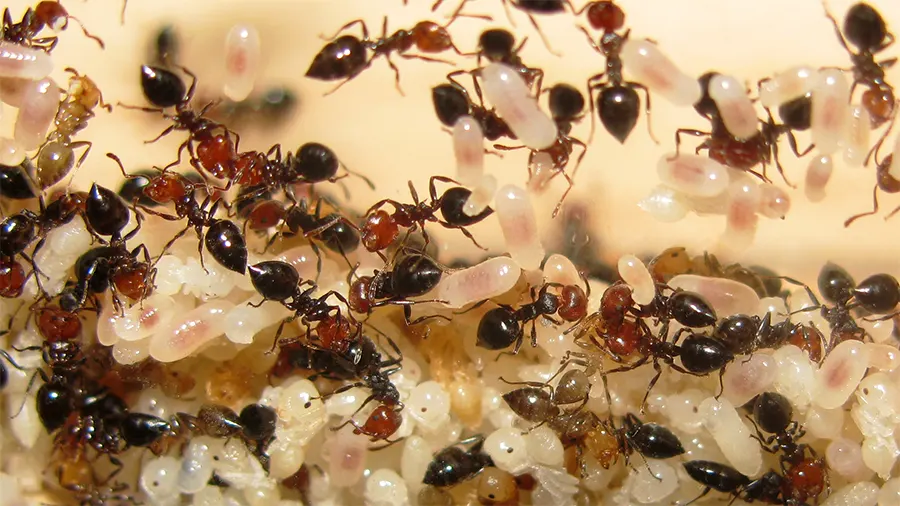
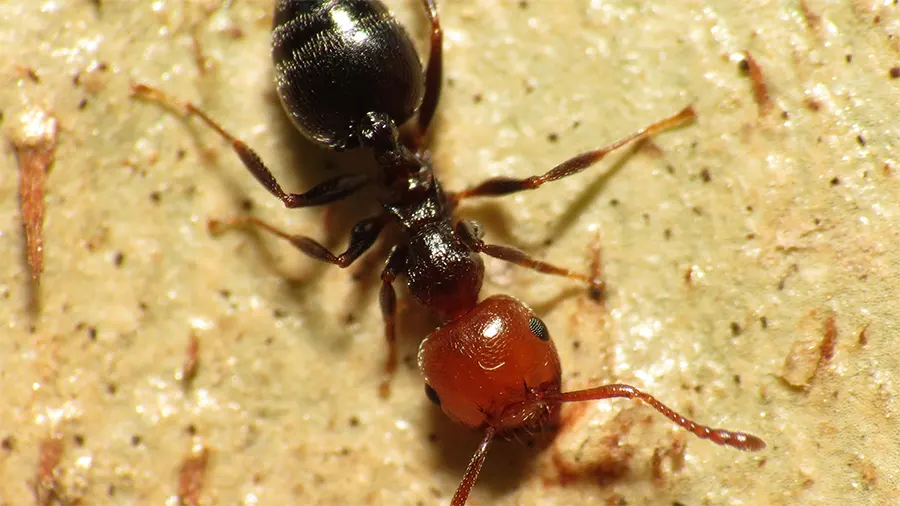
Red head, abdomen in the shape of a pike or heart… Who does not know these peculiar ants? Close relatives of Crematogaster auberti, these ants are much more voracious and sting just as painful as their cousins.
They are native to North Africa and southern Europe and usually inhabit soils in arid and dry climates. When they feel threatened, they raise their abdomens in a characteristic posture in which they secrete chemical substances with which they warn the rest of the colony.
They are somewhat less nocturnal than their cousins and can be observed actively during more hours of sunlight. Overprotective with suspicion, they rarely leave their queen alone, whom they will try to protect at all costs to ensure the future of the colony.
Feeding Crematogaster scutellaris
From sweet liquids such as sugar water or mead, to live or dead insects, dehydrated or even fruit, the feeding of these ants includes a wide range of possibilities.
Being a tremendously voracious species, care must be taken not to overfeed them in an unplanned way in which they can exceed the possibilities of the size of the anthill or in which the colony grows in such a way that it begins to demand an amount of food that it does not we can maintain in the long term.
They tend to grow exponentially and it is very easy to tend to feed them more and more. We will have to be especially careful with that and plan in advance the size we want the colony to have.
Despite the wide variety of foods that this species can live with, it is usually sugary liquids and live insects that they enjoy the most. Remember to always maintain a balanced diet of proteins and sugars so that the colony maintains a healthy rate of growth.
Liquid Sunburst Nectar is often a good idea to cover the anthill’s sugar needs.
Breeding flights of Crematogaster scutellaris
When are the nuptial flights of the Crematogaster scutellaris?
The nuptial flight of Crematogaster scutellaris usually takes place between mid-August and late October. Always depending on the weather conditions at that time.
What time are the flights of the Crematogaster scutellaris?
They usually take place at sunset so, depending on the area you are in, they may happen earlier or later. In general, the time of the nuptial flights of Crematogaster scutellaris is usually between 15:00 and 20:30. As we have said, always depending on the weather and hours of sunlight.
What is the best time to catch Crematogaster scutellaris queens?
It is always difficult to calculate exactly when a nuptial flight of these ants is going to take place, but it is usually more likely in the days after summer storms, when the environment is still humid but the sunny weather has already returned.
Caring for a queen of Crematogaster scutellaris
Claustral and monogynous, this queen usually lays her first eggs in large numbers shortly after capture.
It is recommended to give a microdrop of some sugary liquid weekly during the first months in the tube. This will help her as much as possible in the development of her first nurses.
Later, it will be necessary to maintain the intake of liquids and we can start giving them the occasional piece of insect so that they can contribute with proteins to the small colony and that they can increase their offspring.
How many years does a queen of Crematogaster scutellaris live?
The life expectancy of these queens is usually around 15 or 16 years of life, although it will always depend on many factors throughout the life of the colony.
Size of the ants
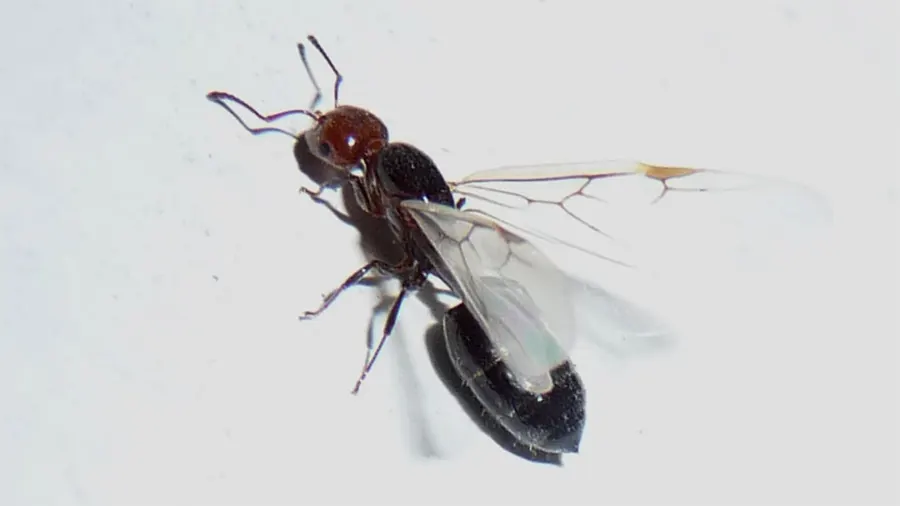
- Queen size of Crematogaster scutellaris: Between 7 and 9 mm.
- Crematogaster scutellaris male size: Between 3.8 and 4.2 mm.
- Crematogaster scutellaris worker size: Between 3.2 and 4 mm.
Hibernation of Crematogaster scutellaris
These ants hibernate in their natural habitat between mid-November and the end of January at a temperature between 8º and 14º during the hibernation period.
Is hibernation mandatory?
Yes, Crematogaster scutellaris require a hibernation period of between 3 or 4 months.
Anthill humidity for Crematogaster scutellaris
Taking into account their predisposition for hot climates, the Crematogaster scutellaris require relatively little humidity in the anthill for the colony to grow satisfactorily.
Keeping the anthill with humidity between 30% and 50% should be more than enough for these ants to feel comfortable within their colony.
Although technically they can subsist only with an external water source such as a drinking fountain, it is more than advisable to control the humidity of the anthill and keep it within correct limits, especially in advanced stages of the colony in which there is already a considerable number. of individuals.
Ideal anthill temperature
A correct temperature for colony development should be maintained between 23ºC and 27ºC in the non-hibernating stages. Keeping the anthill at a higher temperature could cause more growth a few degrees higher, but we must be very careful controlling it and not exceed the temperature or it could be tremendously detrimental to the colony.
Egg and larva time
It is difficult to provide precise data that allows us to know how long it takes them to pass from the phase between egg and ant. However, as a guide, and saving the distances with the different factors that can affect this data such as humidity, diet rich in proteins, sugars or temperature… The approximate time is just under 70 days from when the queen lays the egg.
Data to take into account for your breeding
It is important to know that this species is very chemical, so the anthill must be properly ventilated to avoid possible massive suffocation of the colony.
Being in a test tube, try not to plug too much to try to favor the flow of air and the output of formic acid secreted by this species.
Best anthill for Crematogaster scutellaris
Taking into account the indicative data mentioned in this sheet, a good anthill for Crematogaster scutellaris should be one that allows us to control the temperature and keep it between 23ºC and 27ºC, in addition to maintaining humidity at approximately 40%.
It is a species that can have massive growth, so it is important to have a modular anthill that prevents us from having to move the colony every time it runs out of space, as well as allowing us to progressively expand it as the colony grows. need.
Ant Maniacs 3D anthills perfectly meet all the needs of this species of ants, allowing the size of the anthill to be expanded whenever necessary by adding modules and controlling the humidity and ventilation of each of the areas, allowing a perfect growth of these little ones with red heads.
* Photos owned by Tim Keppens under license Creative Commons
* Photos owned by Katja Schulz under license Creative Commons